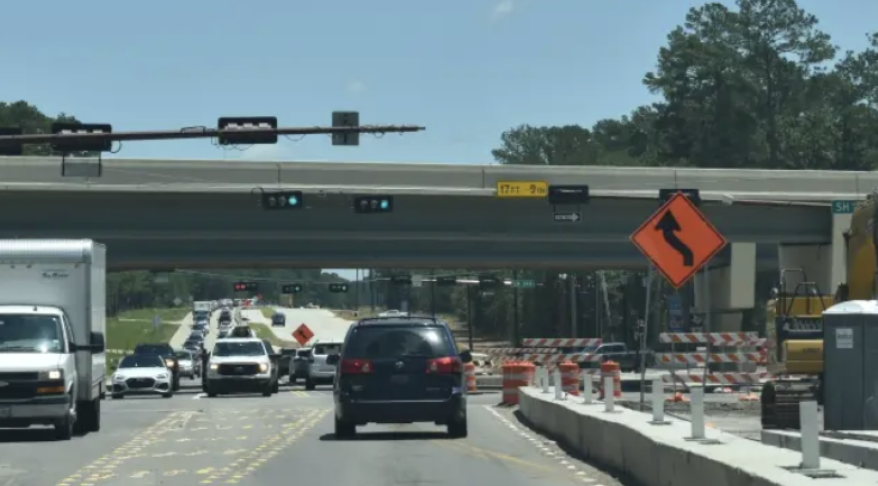
The county is the fourth-fastest growing in America. Raising the minimum lot width for the second time in 13 months will price out the families moving here.

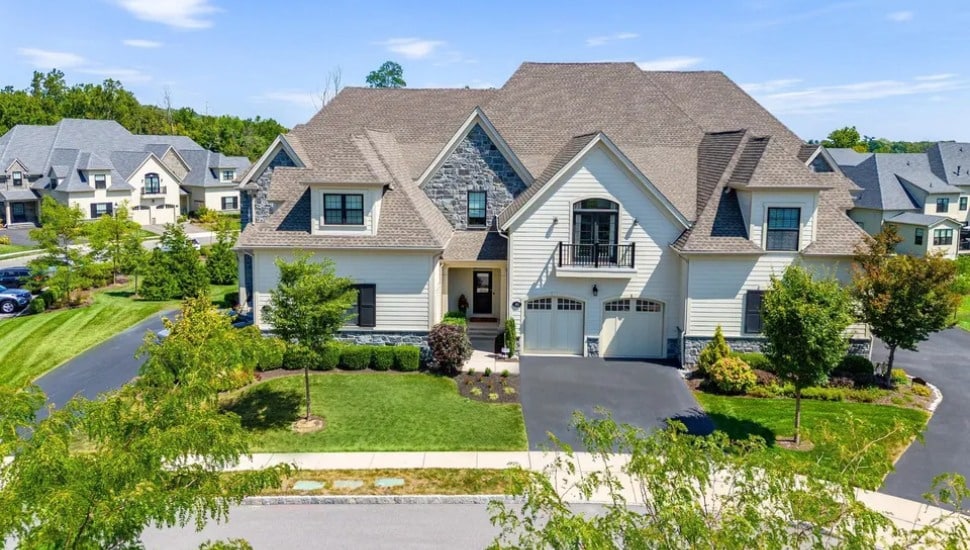
Montgomery County added 30,011 residents in a single year — more than almost any county in the United States. Its population has now passed 781,000, and the Texas Demographic Center projects it will reach 1.4 million. People are coming here because this county has historically offered something increasingly rare in the Houston region: homes that working families can actually afford to buy.
On Thursday morning at 9:30 a.m., Commissioners Court will consider changing that. Buried in an amendment package described in staff materials as addressing "clerical errors" and "necessary clarifications" is a proposal to raise the minimum lot width for new detached single-family homes in unincorporated areas from 40 feet to 50 feet. That is a 25 percent increase in the minimum land a builder must purchase per home. It is the second such increase in 13 months. The first happened in March 2025, when the county adopted its first comprehensive development regulation overhaul in over 40 years.
Before commissioners vote, residents of this county deserve a clear-eyed look at what the evidence actually says.
Minimum lot size regulations are one of the most studied topics in housing economics, and the findings are remarkably consistent.
A 2025 peer-reviewed study published in the Journal of Urban Economics analyzed 52 million property records across more than 16,000 municipalities and found that increasing minimum lot sizes significantly raises home prices. The mechanism is direct: when government requires more land per home, developers are forced to build larger, more expensive homes than the market would otherwise produce. The study found that 78 percent of the resulting price premium comes from that forced upsizing — buyers end up paying for land and square footage they did not ask for and may not be able to afford.
A 2011 study of homes in the Boston area found that areas with more restrictive minimum lot size regulations had home prices 20 percent higher than comparable towns without them — and that prices continued rising for up to a decade after a minimum was increased, compounding the initial impact over time.
Harvard economists Glaeser and Gyourko, whose research on housing regulation is among the most widely cited in the field, found that in most of the country, home prices track fairly closely to construction costs — and where prices diverge from those costs, zoning and land use restrictions are the primary explanation.
The Texas Public Policy Foundation — not an organization known for liberal housing advocacy — documented that land costs account for 20.4 percent of the total price of a new home in Texas. When regulations force more land into each transaction, that percentage translates directly into a higher sticker price for the buyer.
These findings come from universities, federal reserve banks, and nonpartisan research institutions. The direction is consistent: minimum lot size increases raise home prices.
In May 2022, the City of Conroe went through this exact argument. Builders, developers, and housing advocates testified at a public hearing against raising the city's minimum lot width from 40 feet to 50 feet, arguing the change would harm housing affordability for working families. The Greater Houston Builders Association's government affairs director warned that it would "most negatively impact housing availability, housing affordability in the city of Conroe and throughout our region."
The council voted 3-2 to raise it anyway. The councilmember who cast the deciding vote described the 50-foot standard as "temporary" at the time and said the city was "trying to help." The councilmember who voted against it argued that 40-foot lots serve the full spectrum of buyers — from entry-level starter homes to move-up and retirement properties — and that a 50-foot minimum pushes the entry-level product out of reach.
The county is now being asked to apply that same standard — the one Conroe's own supporters called temporary — to all of unincorporated Montgomery County. The experiences in Conroe over the past four years are worth examining as part of that decision.
Much of the statistical backdrop circulating in this debate references Harris County and the City of Houston. Those numbers are real. But Montgomery County has its own numbers, and they tell their own story.
In the first quarter of 2025, the median home price in Montgomery County was $316,000. To qualify for that home at prevailing mortgage rates, a household needed to earn at least $96,800 per year. Only 48 percent of Montgomery County households meet that threshold. That means 52 percent of the people who live in this county cannot afford the median-priced home here.
Montgomery County is more affordable than Harris County. The question this vote raises is whether to protect and extend that advantage — or to begin eroding it through successive regulatory increases that push the median home price higher with each cycle.
The 40-foot standard now being reconsidered was adopted just 13 months ago, following 18 months of deliberate committee work involving engineers, developers, and county staff. The committee included representatives from Sam Yager Inc., Stoecker Corporation, Signorelli Company, Elevation Land Solutions, Pape-Dawson Engineering, and Quiddity Engineering. It was not a rushed or careless process.
The proposed 50-foot change appears in the current amendment package alongside genuinely administrative items. The staff memo characterizes the package as addressing clerical errors and needed clarifications. A 25 percent increase in minimum lot width is neither a clerical error nor a clarification. It is a substantive policy decision with measurable consequences for home prices and housing supply in one of the fastest-growing counties in America. It deserves to be considered on those terms — openly, with public input, and with a clear statement of the reasoning behind it.
The emergency access concerns raised by the Montgomery County Fire Chiefs Association earlier this year are legitimate. Fire trucks cannot pass through streets where residents park on both sides. That is a real public safety problem, documented on video and presented to commissioners — footage showing trucks forced to drive across yards to reach a structure fire.
But a lot width minimum is an indirect solution to a direct problem. A 50-foot lot does not prevent a resident from parking on the street. It does not guarantee emergency access. The fire code already requires secondary access roads for subdivisions with more than 30 units. Street width minimums, parking restrictions, and fire access easement requirements address the access problem head-on without the side effect of raising the land cost embedded in every home.
The commissioners who want to solve the emergency access problem should solve the emergency access problem — directly, with the tools designed for it. Minimum lot width is a blunt instrument that imposes a cost on every homebuyer in every new subdivision in the county in exchange for an indirect and uncertain effect on emergency response.
One dimension missing entirely from this debate is what a lot width increase costs the county's own tax base.
At current county tax rates, every new home in unincorporated Montgomery County generates property tax revenue for the county, school districts, emergency service districts, and other taxing entities. When a minimum lot width increase reduces the number of homes that can be built on a given tract — typically by around 20 percent — it reduces the number of tax-generating households per acre of developed land. That reduction multiplied across dozens of active residential projects in the county adds up.
The county adopted a $508 million budget for fiscal year 2025-26. More homes at attainable prices generates more property tax revenue per acre than fewer homes at higher prices. That is not an ideological argument — it is arithmetic.
The peer-reviewed research is consistent: minimum lot size increases raise home prices. The direction of that effect is not seriously disputed among housing economists. The magnitude in this specific case is uncertain — it will depend on local land prices, building practices, and market conditions — but the direction is clear.
Montgomery County is adding 30,000 people a year. More than half of its current households cannot afford the median home. The 40-foot standard was adopted after a year and a half of careful deliberation. Thirteen months is not enough time to know whether it has succeeded or failed.
There may be a legitimate case for raising the standard. If there is, commissioners should make that case in public, with evidence, in a dedicated hearing — not package it as a housekeeping item alongside typographical corrections.
The people moving to Montgomery County are coming here because homes here are still within reach. Thursday's vote will help determine how long that remains true.
The public hearing is Thursday, April 9, 2026 at 9:30 a.m. at the Alan B. Sadler Commissioners Court Building, 501 North Thompson, 4th Floor, Suite 402, Conroe. Open to all Montgomery County residents. No registration required.